Sovereignty means being able to switch tools
In February, the risk was a vendor you cannot leave. In November, at Be SOVEREIGN, we said the same thing: take the best tool of the moment, set up so that you can switch.
Published on
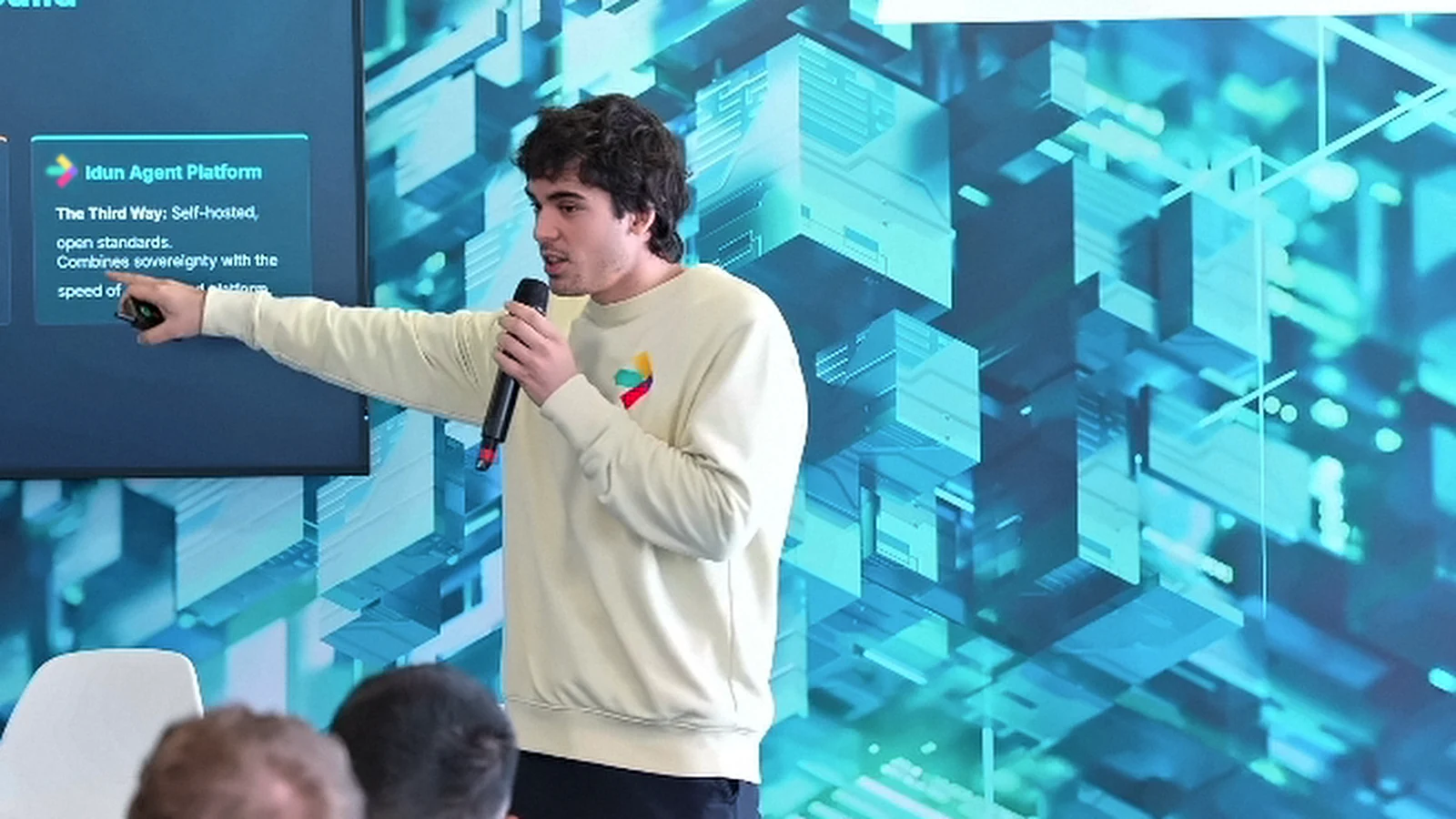
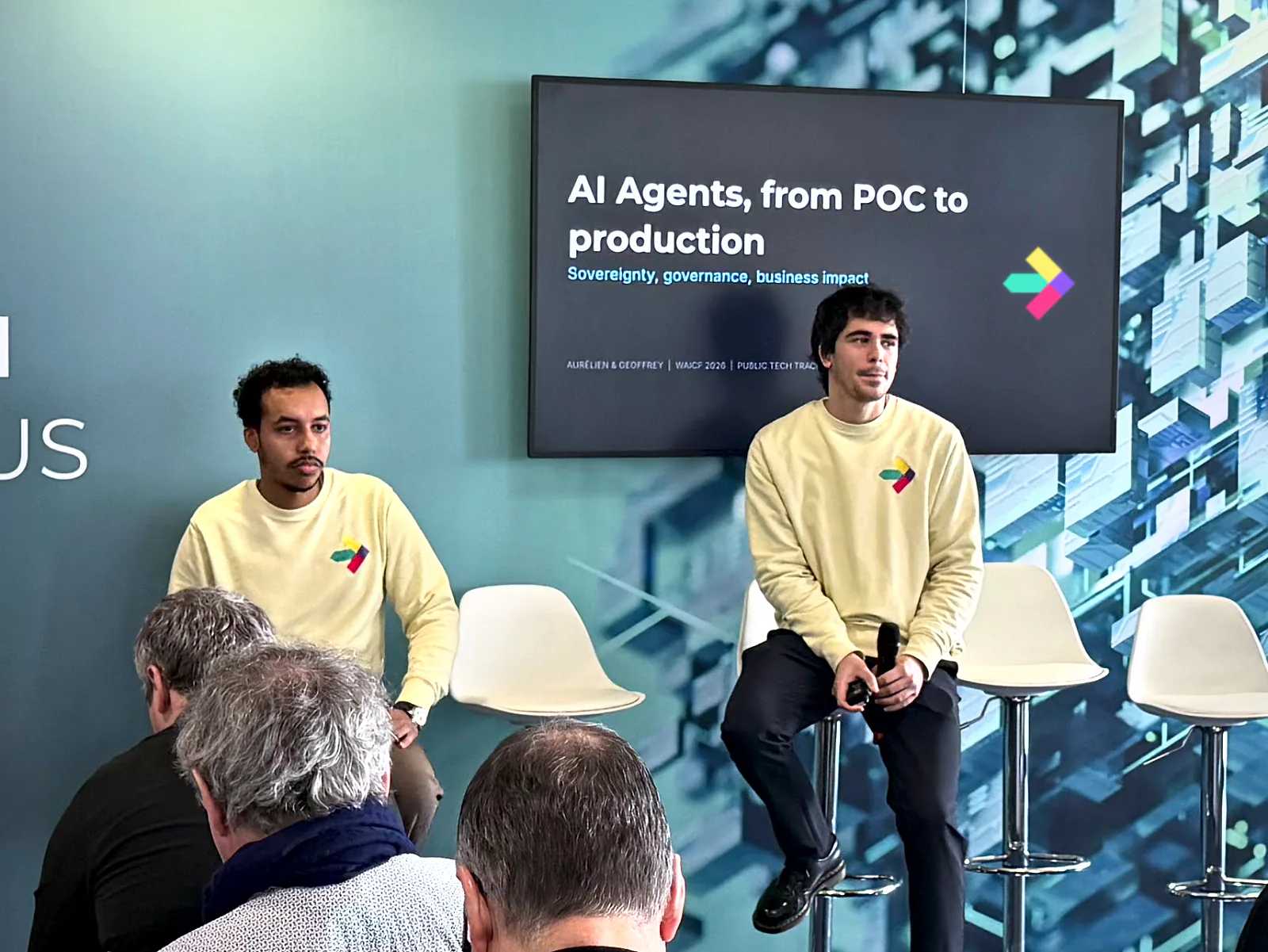
On 12 and 13 February 2026, Idun Group had a stand at the World AI Cannes Festival (WAICF), at the Palais des Festivals in Cannes. Its co-founders, Aurélien Sabaly and Geoffrey Harrazi, gave a 19-minute talk there on moving from POC to production, “Sortir du POC pour industrialiser. Souveraineté, gouvernance et impact métier”. Their finding: successful AI pilots that do not reach production for lack of governance, and a right use case that shows in how teams actually use AI.
The talk is in French. Aurélien Sabaly defines an AI agent, a program that acts autonomously to reach a goal, and sets out four levels, from the assistant that knows the company's documents to agents that cooperate under an orchestrating agent. Geoffrey Harrazi describes the pilots launched in large groups since ChatGPT arrived, which do not reach production for lack of governance. He compares SaaS and in-house development, presents the agent platform Idun Group offered at the time, then closes on how to start: listen to the business teams, start from real usage, keep a business owner in the loop and iterate.
This talk dates from February 2026. Idun Group then offered a platform to deploy and govern AI agents; the company has since refocused on measuring the real usage of AI already deployed. This page reports what was said, without rewriting it, and what still holds.
The finding presented in Cannes: companies are at the early stages of AI use. Asked for a show of hands, the room placed itself at the first level (an assistant that knows the company's documents), sometimes the second (a tool that reads and writes in the information system). Pilots succeed, but do not reach production. What blocks them is not the technology: “We spent more time building that framework than building the agent itself,” said Aurélien Sabaly (translated from French).
The first agent works, Geoffrey Harrazi added; by the second and the third, each team does things its own way. Without governance, there is no value, no owner and no controlled handling of data. And the AI Act requires knowing what each tool does and what it can access.
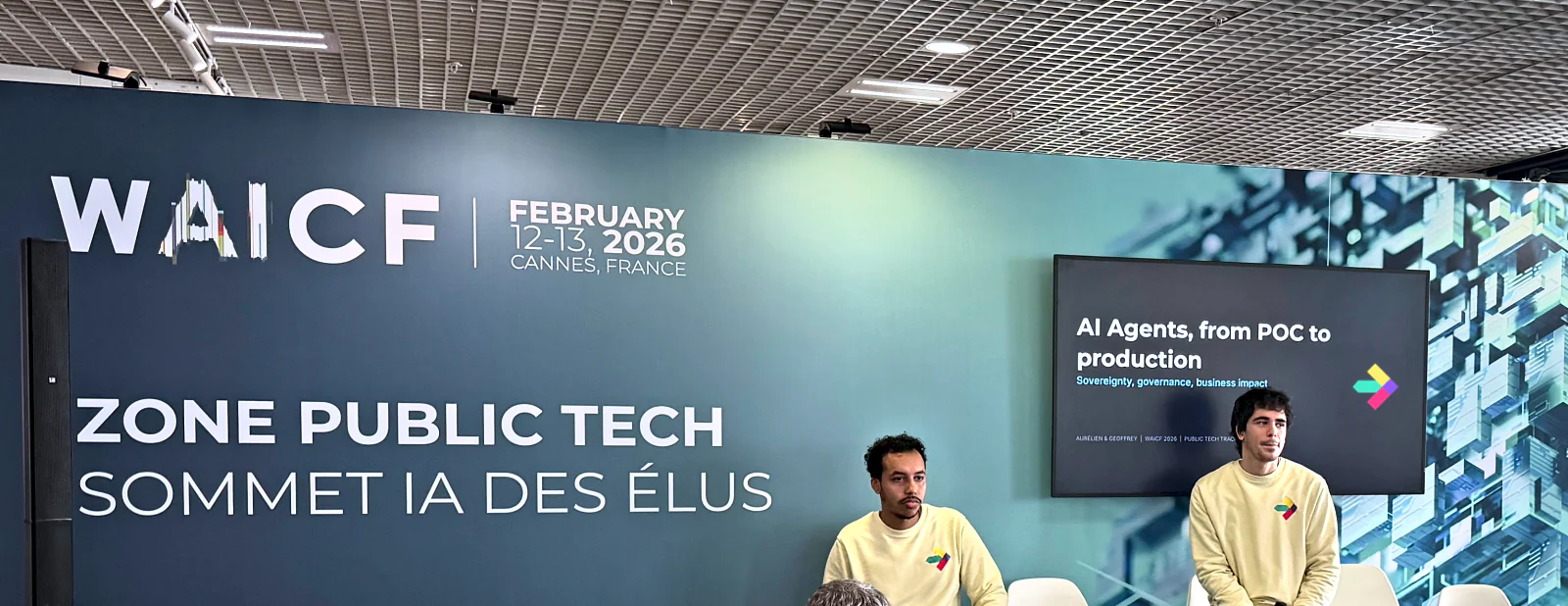
Companies had two paths. SaaS gets you started fast, at the cost of depending on a vendor. Yet what gets automated are business processes: “An agent is exactly the mapping of your business processes” (translated from French). Handing them to a vendor that may disappear, change or raise its prices, with no way out, is a risk. Building in-house is sovereign, but slow, and experts are scarce. Idun Group then presented its platform as a third path; it is no longer its offer.
“The hardest part, oddly enough, is defining the right use case,” said Geoffrey Harrazi (translated from French). His advice: listen to the business teams and look at how they already use ChatGPT. If fifty people use it in the same way, there is something to build on. Then a business owner in the loop, a first case with high value and low complexity, and iteration: models are not deterministic, and iterating is what delivers results and return on investment.
In February, the risk was a vendor you cannot leave. In November, at Be SOVEREIGN, we said the same thing: take the best tool of the moment, set up so that you can switch.
We still find pilots with no owner and no shared rules at our clients: duplicate assistants, undeclared usage, shadow AI. The rules are now written after measurement.
The talk already said it: management must know whether a tool is used and what it lacks. That is what Idun Cockpit measures today across Copilot, ChatGPT, Claude, Gemini, Dust and in-house tools.
Spotting fifty people who use a tool the same way is reading real usage. It is the starting point of our audit: what each use costs and delivers, what to scale, what to cut.
An agent, to give a somewhat rigorous definition, is a program that will act autonomously to accomplish a goal.
You cannot build high-performing agents if you are not able to understand what they do.
Thirty minutes to look at the AI tools already deployed in your company and the decision you are preparing. You leave with a frank view of what measuring real usage would tell you.
Read-only. We analyse usage, never people.