Depend on no single model
“Models are interchangeable” (translated from French) still holds. In November, at Be SOVEREIGN, we recommended the best tool of the moment, set up so that you can switch.
Published on
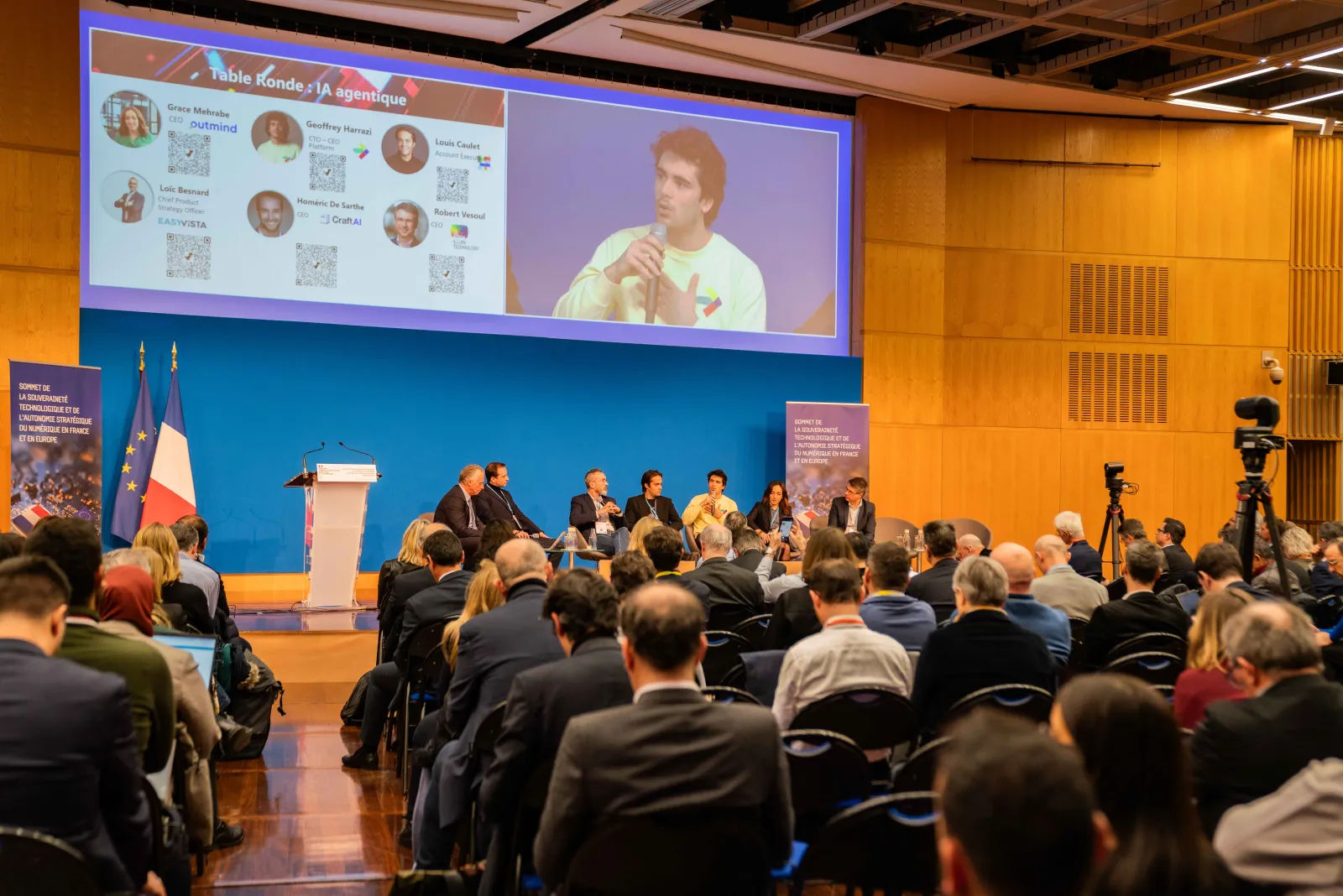
On 20 January 2026, at the French Ministry of the Economy and Finance in Bercy, Paris, Geoffrey Harrazi, co-founder of Idun Group, took part in the round table “Agentic AI: the age of sovereign agents” at the second edition of the Sommet de la Souveraineté Technologique et de l'Autonomie Stratégique du Numérique en France et en Europe (Summit on Technological Sovereignty and Strategic Digital Autonomy in France and Europe), organised by Innovation Makers Alliance with IT for Business. He argued, when Idun Group still offered an agent platform, that models were becoming interchangeable and that sovereignty now lies in what orchestrates them. The round table concluded that adoption goes through the business teams and that return on investment is calculated before a project starts.
The session is in French. Five two-minute pitches open it: Craft AI, EasyVista, Dust, Idun Group and Outmind. Geoffrey Harrazi presents the open-source platform Idun Group offered at the time to move from POC to production. Robert Vesoul (Illuin Technology) then joins the stage for a round table of about eighteen minutes, fed by questions from the room: is an AI centre of excellence needed, how to bring teams on board, how to handle the security issues specific to AI, who owns what a start-up builds for a client, how to measure return on investment.
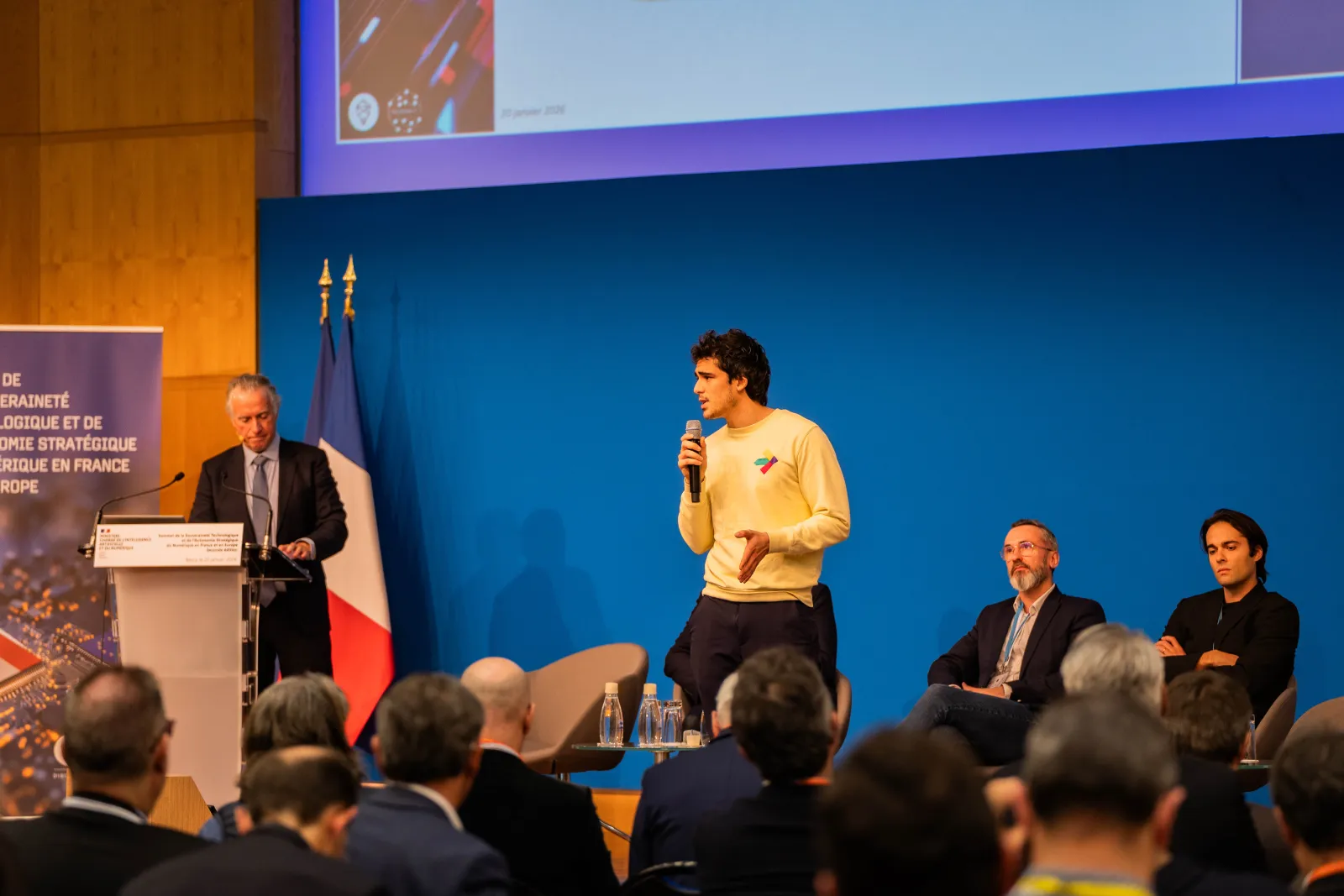
This talk dates from January 2026. Idun Group then presented an open-source platform to industrialise and govern AI agents; it has since refocused on measuring the real usage of AI already deployed. Here is what was said that day.
The session was one of the summit's showcases of sovereign providers, with Craft AI, Dust, EasyVista, Idun Group, Illuin Technology and Outmind. In his pitch, Geoffrey Harrazi started from the choice companies have faced since ChatGPT: relying on large platforms, often those of the GAFAM, at the cost of their sovereignty, or building everything themselves. He separated the sovereignty of the model, where France has Mistral, from that of orchestration: “Models are interchangeable. So now, the new value will be how sovereign the orchestration is” (translated from French). The real obstacle lay elsewhere: “There is a real problem moving from POC to production” (translated from French).
During the round table, he came back to two points. Security: without guardrails (forbidden topics, a set language, no personal data), an agent does not go into production. Ownership: open source makes the code auditable, avoids dependence on a vendor and leaves the client owning its agent's workflow.
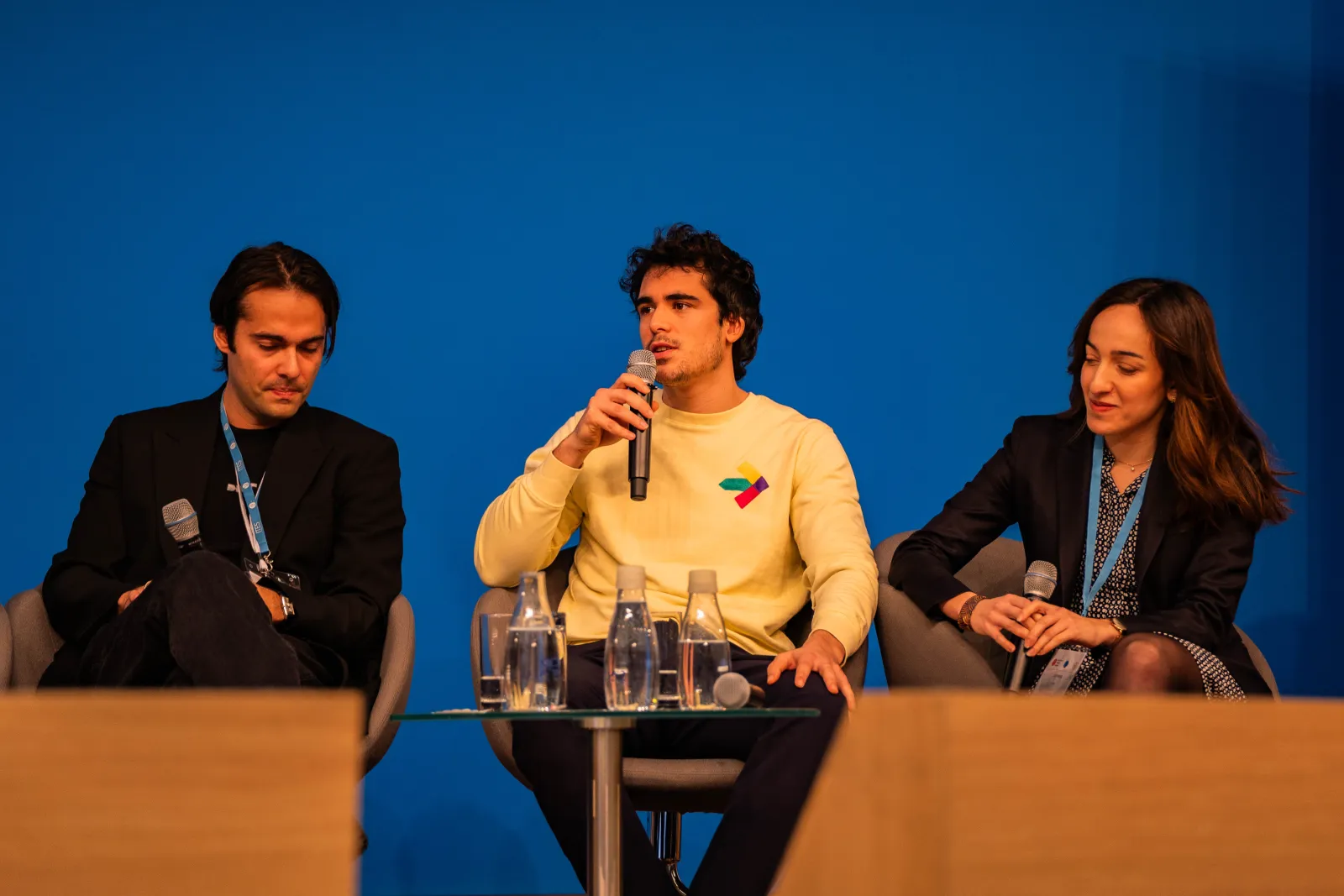
Adoption goes through the business teams and through example: start from the problem to solve, involve the business teams, show everyday cases and start simple, because getting to grips with the tools takes months. For Louis Caulet (Dust), a centre of excellence serves as a reference at first, but the projects that work start centralised, then open up to the teams.
Security is handled at two levels: the agent's behaviour (guardrails, an agent that judges another's answers) and the architecture, since an agent opens a new entry point into the information system. To be able to leave with what you have built, Louis Caulet cited reversibility and no-retention, no-training agreements with model providers.
Return on investment is calculated beforehand: Grace Mehrabe (Outmind) advised measuring the frequency and impact of a task upfront. Loïc Besnard (EasyVista) concluded that companies have moved from experimentation to usage, and that what matters is user buy-in.
“Models are interchangeable” (translated from French) still holds. In November, at Be SOVEREIGN, we recommended the best tool of the moment, set up so that you can switch.
The gap between the POC and everyday use remains the real issue. That is what we measure today: the real usage of AI already deployed.
Without a measurement taken beforehand, you never get a figure. Our audit starts there: measure real usage, then what each use delivers.
Getting to grips with AI takes months and goes through the business teams. It is tracked in what teams do with AI every day.
By using open-source technologies, we make sure we can fully trace everything that happens.
Thirty minutes to look at the AI tools already deployed in your company and the decision you are preparing. You leave with a frank view of what measuring real usage would tell you.
Read-only. We analyse usage, never people.