Sovereignty also depends on the law
Where a server runs does not say which law it falls under. For each measured use, we now look at where the tool is hosted and which model it calls.
Published on
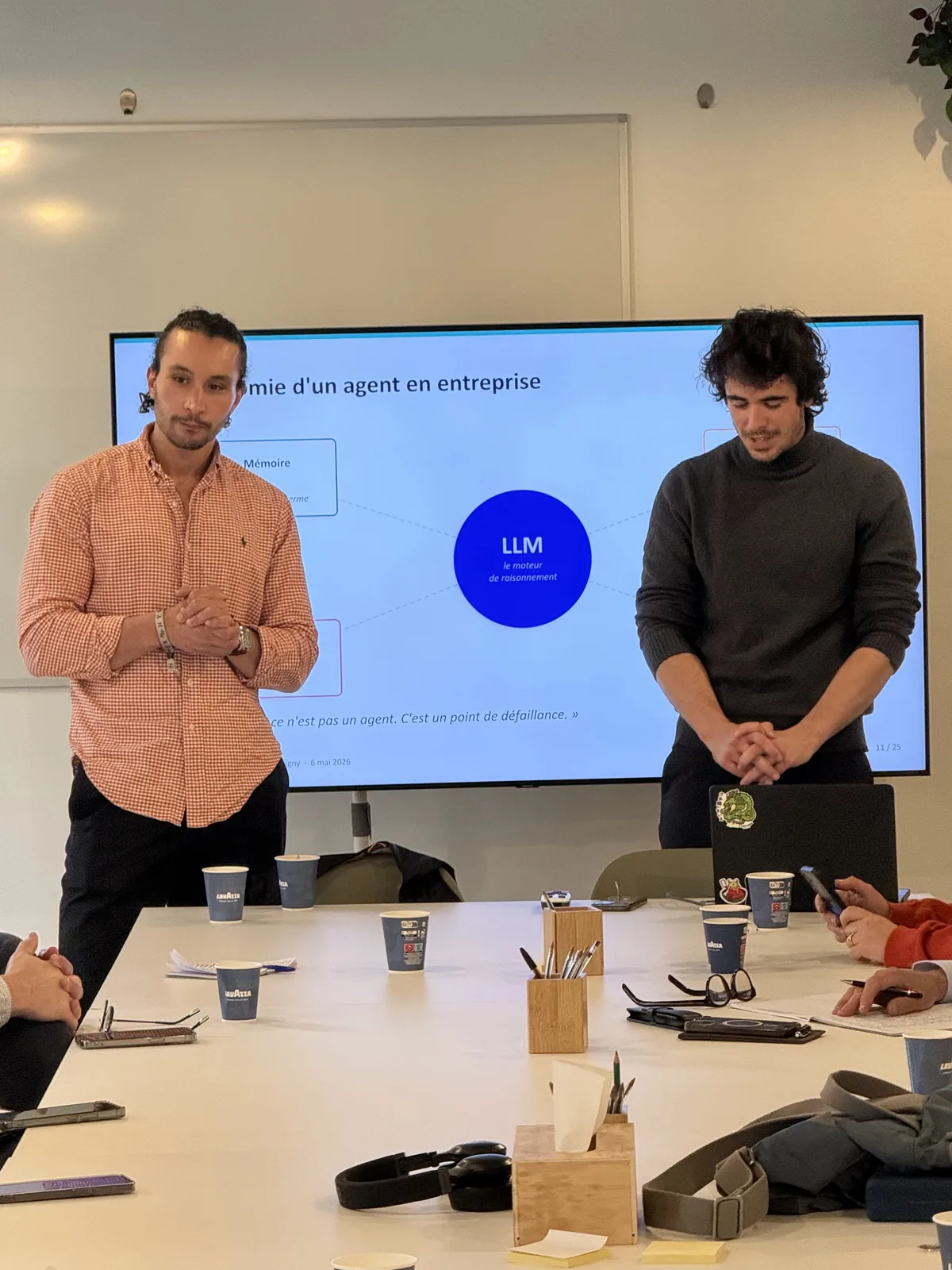
On 6 May 2026, in Paris, Idun Group gave a talk to the members of Réseau Daubigny, an association of senior executives, in post or between positions. Its title: “Sovereignty and governance of AI agents”, subtitled “What every executive should know before signing their next AI project”. This pro bono talk predates our June 2026 refocus on measuring real AI usage.
Réseau Daubigny is an association of women and men from different cultures and backgrounds, senior executives in post or between positions. It was founded in early 2003 by executives looking for work who wanted to make the most of a network-based job search; its statutes date from 2004 and its charter rests on volunteering. It describes itself as a “gatherer of energies and incubator of talent”.
The network holds sessions to introduce its members to AI. One of them asked us to speak there; we did so pro bono, on Wednesday 6 May 2026, from 6 to 8 pm, in a meeting room in Paris's 2nd arrondissement.
The talk followed four stages: diagnosis, decision, deployment, discipline. The diagnosis started from the AI Act, its Article 4 on AI literacy within teams and the coming obligations for high-risk uses, notably in human resources. Sovereignty was described in five layers, from silicon to agents; most companies lose it at the model and agent layers. Hosting in France is not enough: “A server in France is worth nothing if the parent company is subject to US law.”
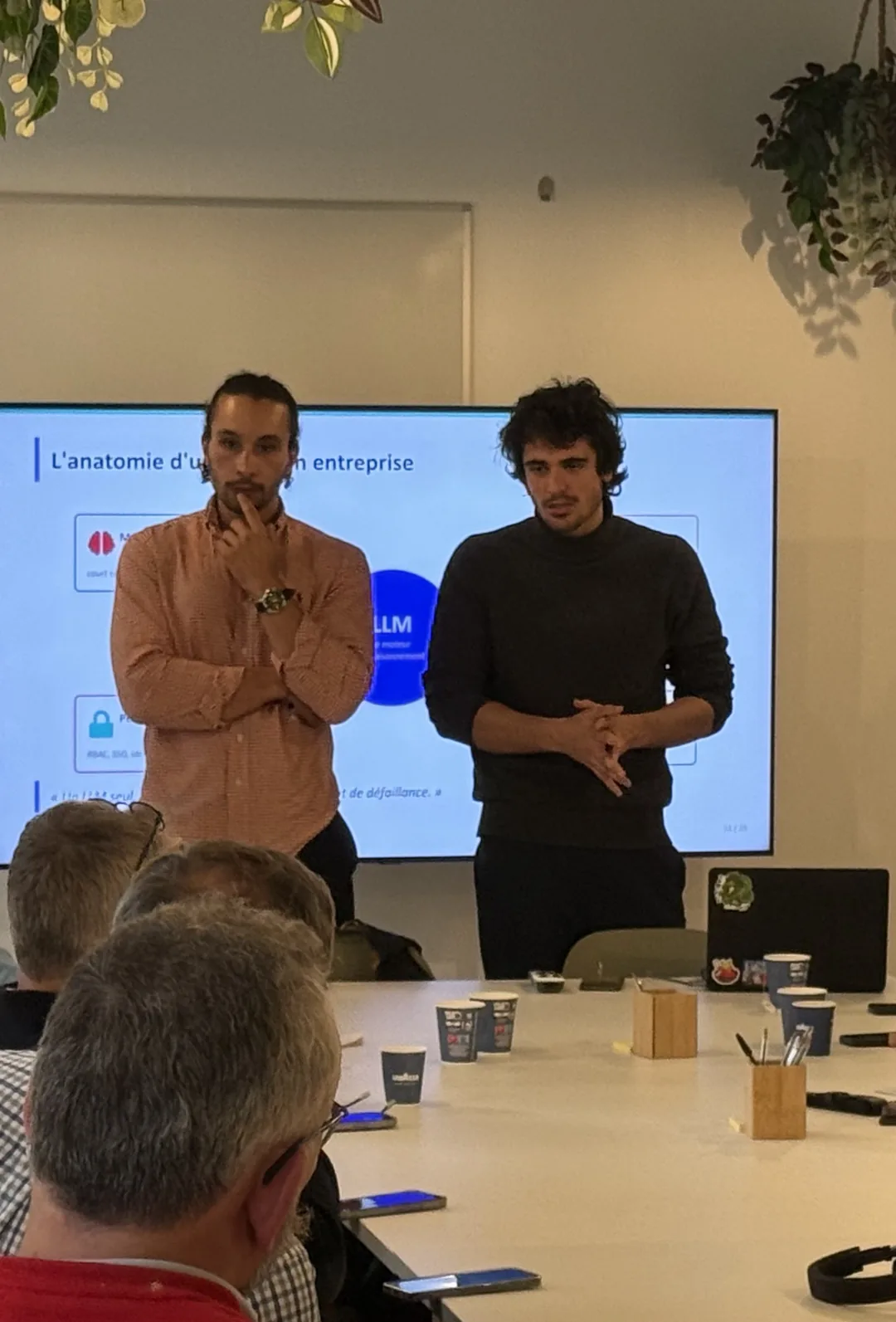
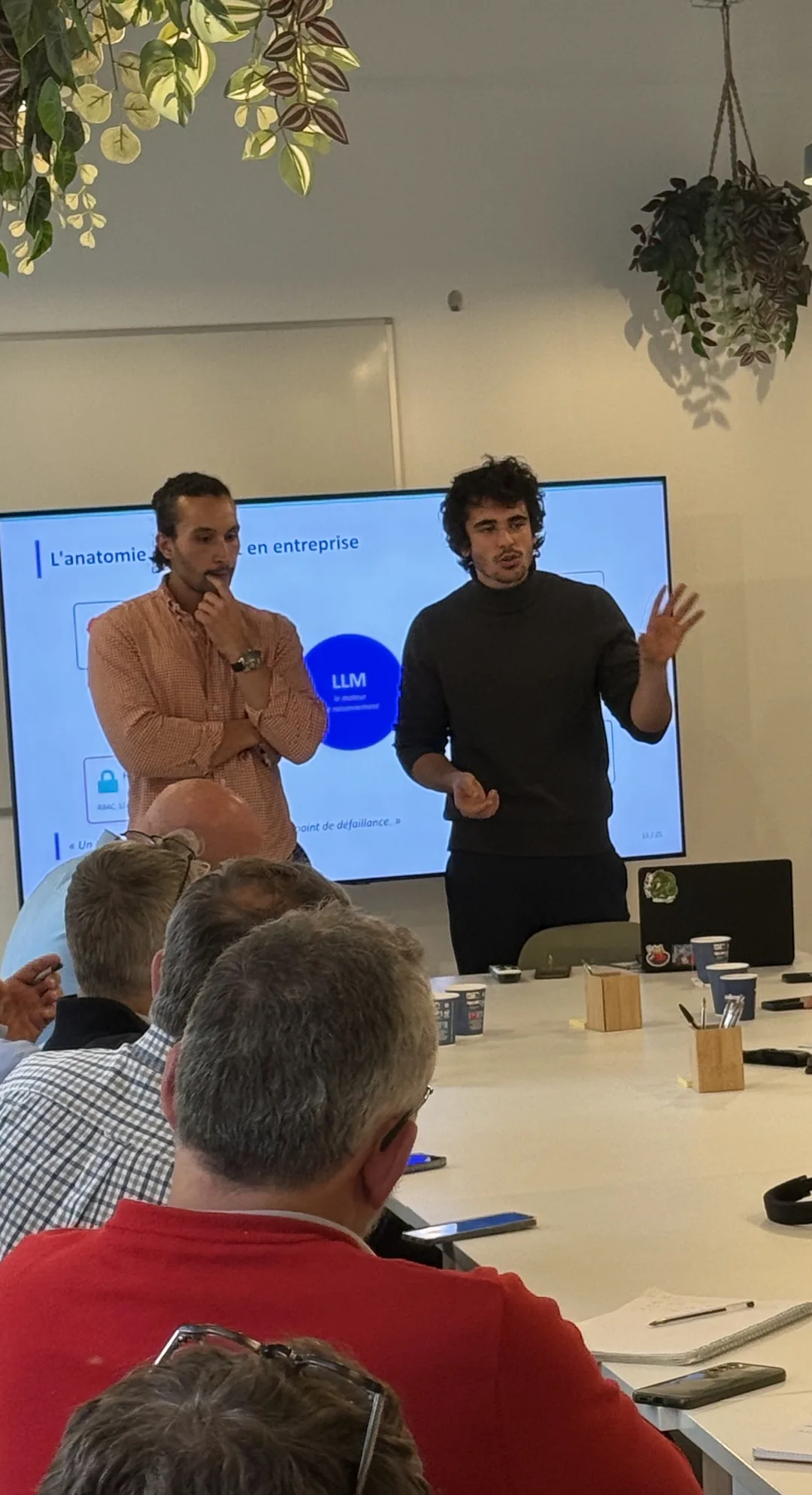
The decision stage set out four levels, from chatbot to autonomous agent, by way of copilot and workflow: “Everyone says they do AI. The real question is: on which floor?” The slide “The anatomy of an AI agent in the enterprise”, the one in the photos, put the language model at the centre, surrounded by memory, tools, permissions and observability: “An LLM on its own is not an agent. It is a point of failure.”
The deployment stage explained why so many AI projects never reach production: errors that pile up from one step to the next, a pilot that predicts nothing about production, real data messier than test data. “When conventional software crashes, it stops. When an AI agent crashes, it makes things up.”
Finally, the discipline stage rejected the choice between closed software and building everything yourself, in favour of a common layer for authentication, rules and guardrails; that layer was our offer at the time, and it is not our offer today. It recalled that the AI Act, the GDPR, NIS2 and DORA all apply at once, and that responsibility cannot be delegated: “You cannot outsource responsibility to the vendor.” The talk ended with three questions for Monday morning, including mapping your agents and training your teams.
Where a server runs does not say which law it falls under. For each measured use, we now look at where the tool is hosted and which model it calls.
The first Monday-morning question was to map your agents. It has become our job: measuring the real usage of AI already deployed, before any decision.
The talk noted it in May. When we measure real usage, we find it at our clients: it points to a need the official tool does not cover.
It cannot be handed to the vendor. To exercise it, management needs to see what its AI tools do, with a measurement independent of the vendors.
Thirty minutes with one of the founders to look at the AI tools deployed in your company, before you sign your next project.
Read-only. We analyse usage, never people.