Sovereignty is built, one use at a time
The course's conclusion holds. We apply it today starting from measurement: you decide what must be sovereign once you know the real uses.
Published on
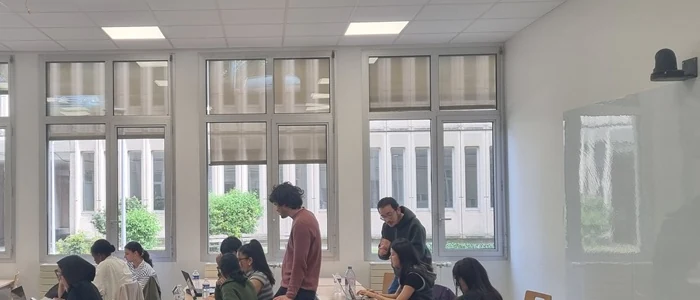
On 3 and 17 April 2026, Idun Group co-founder Geoffrey Harrazi taught two days of classes at IMT Business School, for the Information Systems Management and Engineering (MISI) major of the Grande École programme, whose students are apprentices or on work-study contracts. The course was titled “Digital sovereignty and the governance of AI agents in companies”. It predates our June 2026 refocus: it also presented the agent platform we offered at the time.
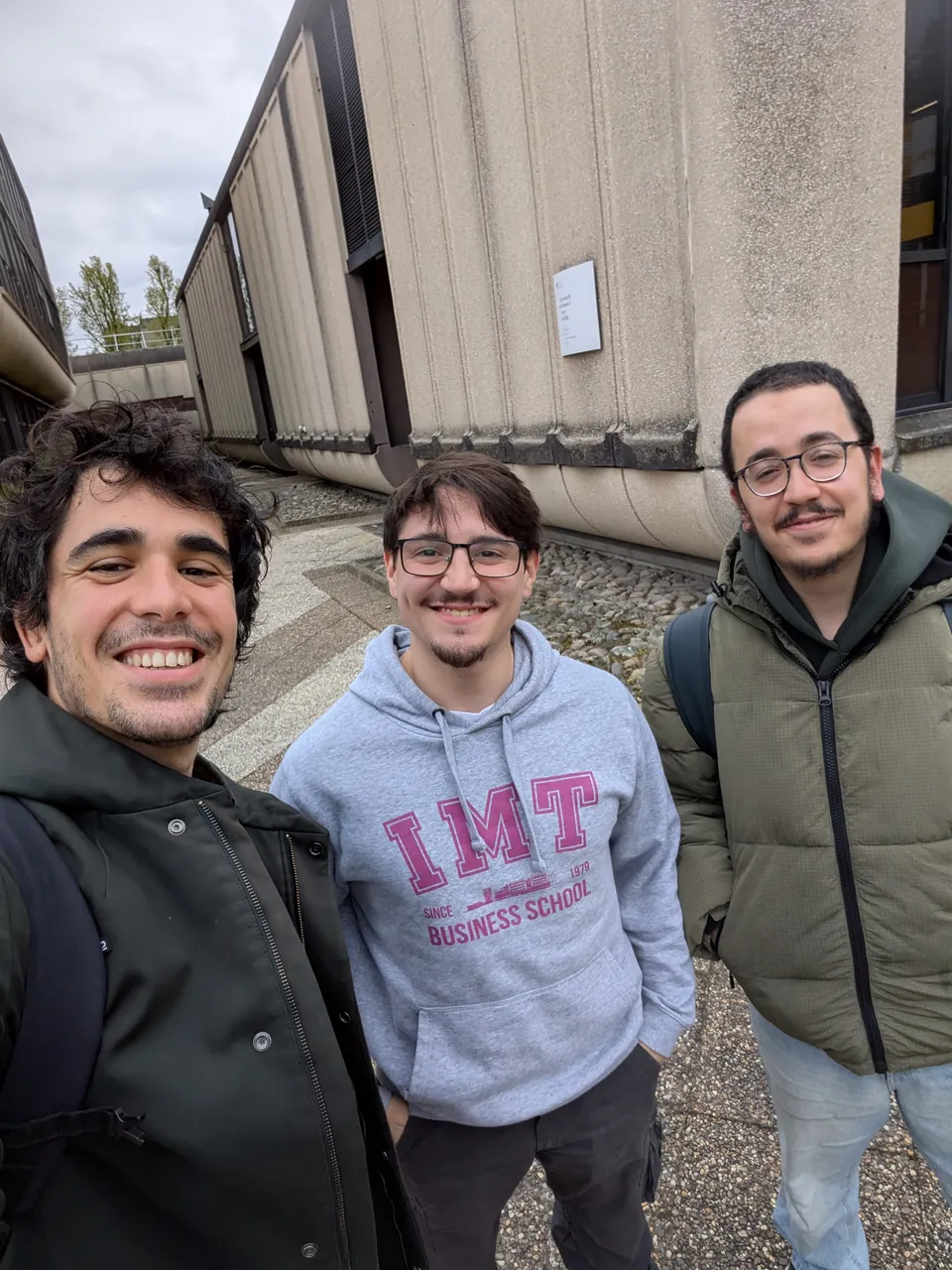
IMT Business School asked us to give lectures and lead workshops for the Information Systems Management and Engineering (MISI) major of its Grande École programme. The school wanted the course to cover digital sovereignty and to present the agent platform we offered at the time. It chose two days, 3 and 17 April 2026.
The students of the major are all apprentices or on work-study contracts, with assignments related to digital and information systems in their companies. Geoffrey Harrazi taught the course, joined on 3 April by Ahmed Ennaifer, an engineer at Idun Group. The students came with their laptops, set up for hands-on work.
The first act, “The European Awakening”, traced the history of digital Europe, from Cloudwatt and Numergy to SecNumCloud, and drew a distinction: keeping data in a given location is not enough to make it sovereign. It reviewed the GDPR, the AI Act, NIS2 and DORA, then the five layers of sovereignty, with a debate on SecNumCloud and a workshop: tracing the path of a sensitive piece of data in each student's host company.
The second, “The Agentic Break”, set the assistant apart from the agent (“A chatbot answers. An agent decides.”), described the components of an agent that need governing, the MCP protocol and the rise of undeclared uses, from shadow IT to shadow AI and on to “Shadow Agents”. The third, “The Wall of Reality”, looked at why so many AI projects never reach production, then presented our platform of the time. The last, “Building the Future”, had the students work in groups on the information system architecture of a fictional company, before a closing debate.
The course's conclusion holds. We apply it today starting from measurement: you decide what must be sovereign once you know the real uses.
Hosting data in Europe does not say who can access it. For each measured use, we look at where the tool is hosted and which model it calls.
The course described the rise of AI tools used without being declared. We find them when we measure real usage: they point to a need the official tool does not cover.
Sovereignty cannot be decreed. It has to be architected.
Thirty minutes with one of the founders to look at your AI tools and at what measuring their real usage would tell you.
Read-only. We analyse usage, never people.