Declarations are no longer enough to decide
At ICF Habitat, 92% of the 444 use cases uncovered are measured in real usage rather than declared. Deciding on what teams declare alone means deciding on an incomplete picture.
Published on
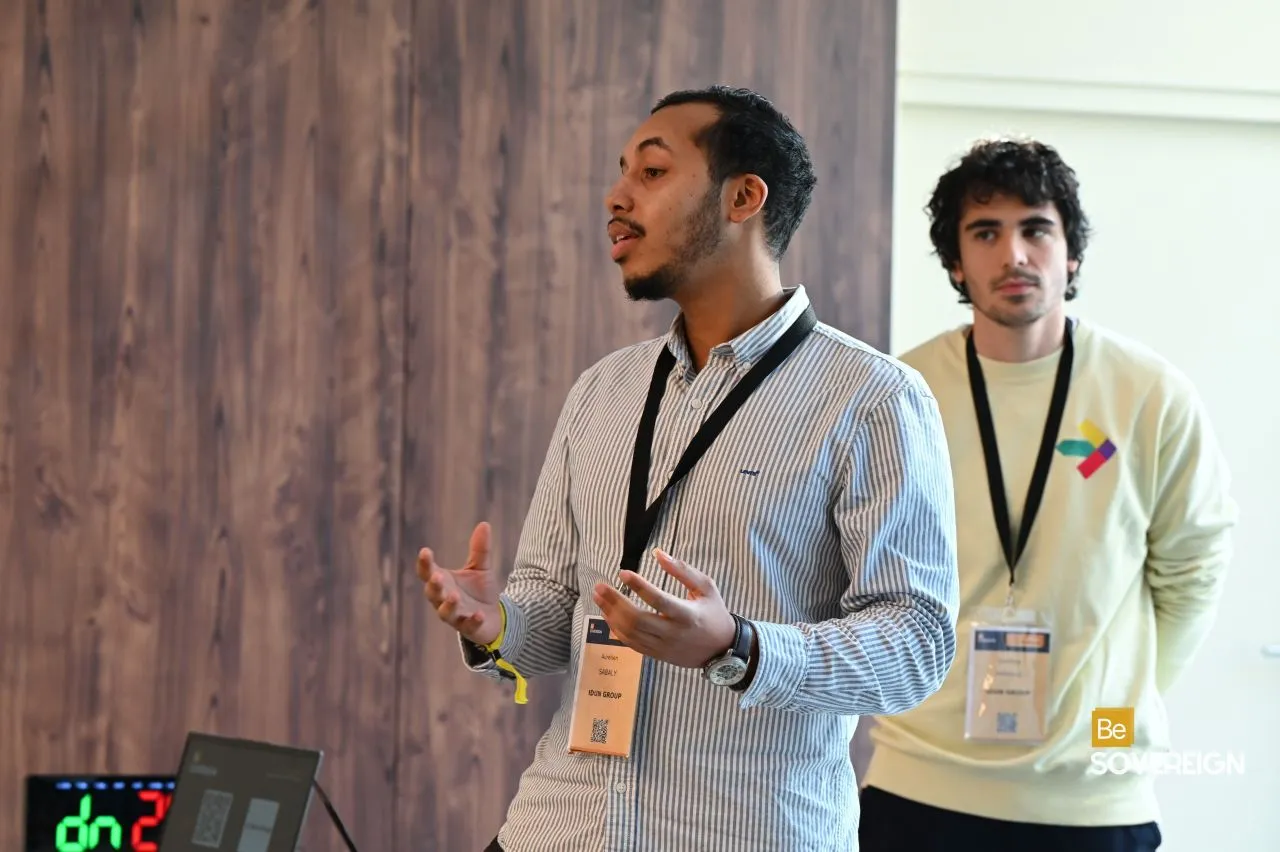
On 23 November 2026, at the Pullman Paris Montparnasse, Idun Group was a partner of the first edition of Be SOVEREIGN, Content & Business's congress on digital sovereignty. Idun Group co-founders Aurélien Sabaly and Geoffrey Harrazi presented there, with Simon Nalin, head of the Solutions & Data unit in the IT department of ICF Habitat, the social-housing subsidiary of SNCF Immobilier, the audit of real AI usage carried out at ICF Habitat. The result: 444 use cases uncovered, 92% of them measured in real usage rather than declared; sovereignty can only be decided on what you can see.
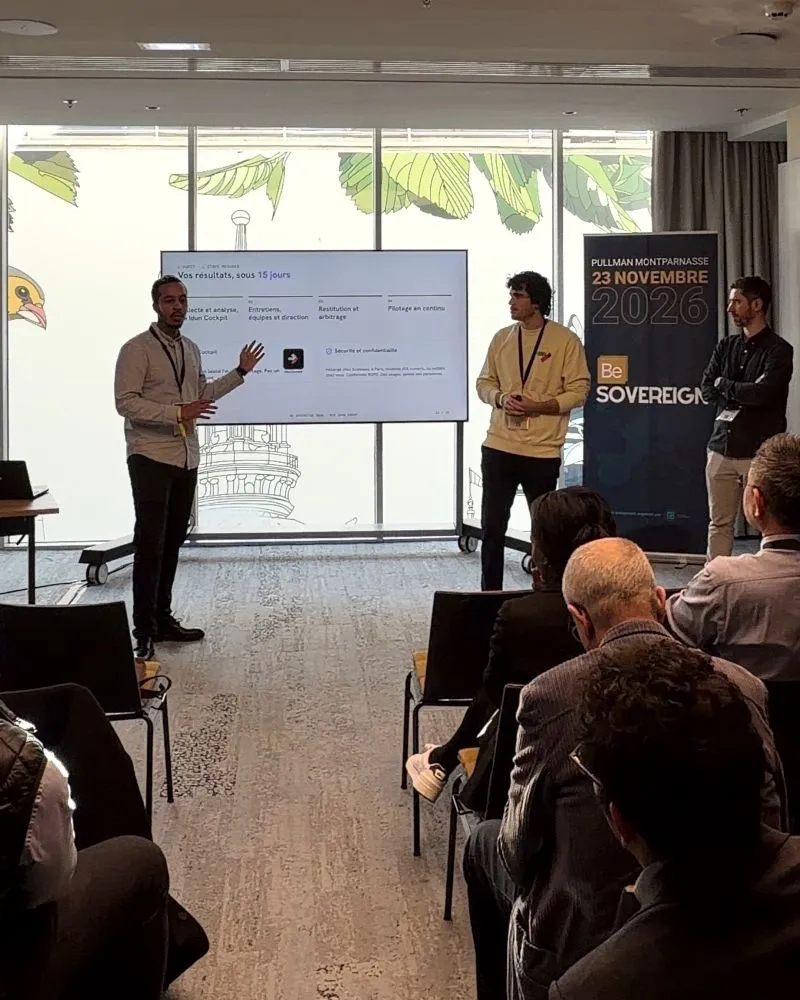
For its first edition, on 23 November 2026 at the Pullman Paris Montparnasse, Be SOVEREIGN presented itself on its website as the B2B gathering on digital resilience and sovereignty, to help organisations regain control of their technologies. Its programme followed five tracks: cybersecurity and resilience, cloud and infrastructure, artificial intelligence, governance and steering, compliance and regulation.
Idun Group was a partner, with a corner in the startup area all day, staffed by Arthur Rabiller, Aurélien Sabaly and Geoffrey Harrazi. Our talk, from 2:00 to 2:30 pm on Stage 1, was listed in the programme as “You know how much you spend on AI. We tell you how much it brings in!” (translated from French).
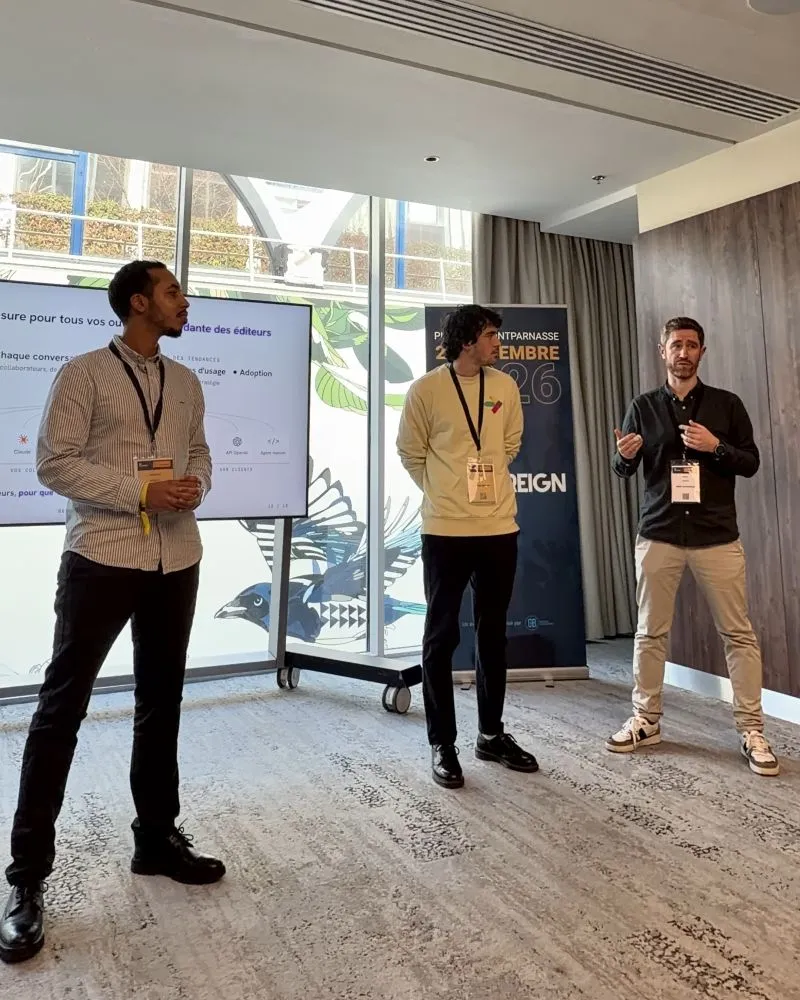
The talk started from a paradox we heard in our interviews: companies bring up sovereignty as soon as they discuss AI governance, yet their AI tools come from elsewhere. The figures behind this finding will be published, with their base, in our white paper on real AI usage in the enterprise, in January 2027.
Our reading fits in one sentence shown that day: “You cannot be sovereign over what you cannot see” (translated from French). AI is everywhere; measuring it is most often absent, or left to the vendor's own statistics. In our engagements, 20 to 40% of paid AI licences go unused, and shadow AI signals a need that the tool provided does not cover.
The method has three steps: open up usage, measure it, then write the rules on what the measurement showed. Decisions are made use case by use case, according to what each case touches and what it delivers; sovereignty is read on two layers, hosting and the model. Not everything needs to be sovereign: only what warrants it.
To measure, Idun Cockpit reads Copilot, ChatGPT, Claude, Gemini, Dust and in-house tools in a single measure, independent of vendors, which counts usage and never individuals. The audit delivers its results within fifteen days, and the steering tool stays with the client.
Simon Nalin, head of the Solutions & Data unit in the IT department of ICF Habitat, the social-housing subsidiary of SNCF Immobilier, described on stage the audit of real AI usage carried out with Idun Group. The results presented: 444 use cases uncovered, 92% of them measured in real usage rather than declared, for 1,500 employees. These figures come from Idun Cockpit, with data as of 10 October 2026, and Simon Nalin approved them in writing.
At ICF Habitat, 92% of the 444 use cases uncovered are measured in real usage rather than declared. Deciding on what teams declare alone means deciding on an incomplete picture.
Knowing which uses require a sovereign tool means knowing them first. Without measurement, choices are made on principle, tool by tool.
Where a tool is hosted and which model it calls are two separate questions, to be examined for each use.
In our engagements, 20 to 40% of paid AI licences go unused, while shadow AI reveals needs left uncovered. Only measuring real usage shows both.
An audit that relies only on what people declare is no longer worth anything. The cockpit sets what is declared against real usage, in record time.
Thirty minutes to scope the tools to measure and the decision you are preparing, whether budget, renewal or sovereignty. You leave with a frank view of whether an audit makes sense for you.
Read-only. We analyse usage, never people.